There was never a time in my life that I did not know I was black.
My mother never let me get away with using slang at home. If I used improper English, she would pretend she couldn’t hear me. She ignored me until I said the sentence correctly. When I got to school, my grammar and diction was very different from that of my classmates. They would tell me that I “talked like a white girl.” I didn’t know any white people personally, and probably neither did they, but I did sound like the white people I saw on television. My mom and my teachers told me I just had good grammar.
My mother never let me get away with using slang at home. If I used improper English, she would pretend she couldn’t hear me. She ignored me until I said the sentence correctly. When I got to school, my grammar and diction was very different from that of my classmates. They would tell me that I “talked like a white girl.” I didn’t know any white people personally, and probably neither did they, but I did sound like the white people I saw on television. My mom and my teachers told me I just had good grammar.
I never saw being black as a bad thing. Everyone I knew was black, so it wasn’t even like it was a particularly different thing. In second grade, we had a special educator named Mrs. Elizabeth Clarke. She had been to Africa and dressed in bright, dramatic prints. She had a voice and a carriage that demanded respect, although she was little taller than her students. She told us that we were young, gifted and black. She taught us that to be black was to be the strongest of the strong, the descendants of kings and queens that had been stripped of their dignity and yet somehow survived. She taught us that the first people to walk the face of the earth looked like us, that the builders of the pyramids looked like us, that we were the creators of jazz, blues, rock and roll, that we were inventors, doctors, and innovators. I didn’t realize it at the time, but looking back on it now I see that she was preparing us for the death of 1000 paper cuts that is inhabiting a brown body in a white world.
My first ‘deep cut’ came when I was eleven. My mother and I were walking to visit my grandmother at University Hospital. I forget where we had gone before that, maybe the movies up at Severance, but for some reason we were coming down the hill through Little Italy instead of walking up through University Circle. Along the way my mom had to pee. She stopped in several restaurants asking to use their bathroom. All of the restaurants told her that the bathrooms were for customers only and that she could not use them. After the fifth or sixth place told her no, my mom couldn’t hold it any longer and she ended up peeing on herself. She was wearing white linen pants and it was very obvious that she had had an accident. My mother continued to stop in restaurants asking if she could use their bathroom to clean up, and people were very rude to her. I was embarrassed for myself and for her. I couldn’t understand why no one would let us use the bathroom and why my mother had to be humiliated like that. My mother never cried in public, but she cried that day. When I asked her why everyone was being so mean to us, she said: “because we are black, and they don’t like black people in Little Italy.” That was the first time I realized that being black could be a bad thing in some places.
My parents are the same race. All my siblings are the same race. I have a sister and brother that are half Liberian. My father’s great grandfather (on his mother’s side) was a railroad worker from Singapore, but I don’t know anything about them. My mother’s great grandmother (on her father’s side) was Blackfoot, but I don’t know much about them either. My African stepmother and her family are very culturally different from American blacks. They are wealthy and well educated. They live in top cities around the world and have immaculate houses. They look down on American blacks and say we are lazy and too focused on sports instead of education. My stepmother has a thing about knives. She keeps them in the garage instead of the kitchen. I asked her why one time and she told me that she had seen friends and relatives cut apart with knives in front of her, and she did not want them in her house. Her accent is not very heavy but it gets thicker the angrier she gets. I can tell if she and my dad have been fighting by how thick her accent is when she answers the phone.
My mother and father both grew up here in Cleveland. My mother went to Villa Maria Prep School in Pennsylvania for two years. She was one of less than five black students and she hated it. She used to get into fights with the other girls because she was black and poor. She didn’t fit in with the other black students because she was poor. She ran away from school twice and finally my grandmother gave in and let her go to Shaw with the rest of her friends. My mother didn’t have any friends of other races or ethnic groups as an adult. She was very wary of white people and was always reminding me that we were just as good as them.
My father was a musician, so he had many friends of different races and ethnic backgrounds. I didn’t grow up with him, so I’m not sure about a lot of details from his childhood. My father moved to Atlanta in his late twenties and worked for Coca Cola. He didn’t like it and eventually ended up starting his own interior design business. As an interior designer, many of his clients are white. He has had several famous clients like Al Horford and Elton John. My father likes working for white people because he says “They’re not funny with money.”
Growing up, I learned that you have to work half as hard to get twice at much. I thought that individual racism was a problem for my grandparents generation, not mine. I thought that racism used to be a big problem, but it was going away. By middle school I had white and Asian friends. I dated outside my race and it wasn’t a big deal to anyone but our grandparents. By college I had a very diverse group of close friends: an Irish girl, a Fillipina, an Armenian, a Southern Redhead, and me. We called ourselves United Nations. I didn’t have a lot of black female friends because I didn’t fit in with them. It was elementary school all over again and I was tired of being accused of not being black enough. Of course my white friends also told me that I ‘wasn’t really black’, but they meant it as a compliment, and at the time, I took it as one. It wasn’t until my mid twenties that I started to understand internalized and structural racism and some of my assumptions started changing.
I am black. I am black because I am black. What I mean is, people in positions of power will identify me as black because of the color of my skin. Culturally, I feel black because of a set of intangibles and experiences that link me to other people of color, specifically Americans of African descent. Physiologically, I am black because my skin has melanin and my hair is the tightly curled coils of my African ancestors, an evolutionary adaptation to living near the equator. I am proud to be black because I am wonderfully made in the image of God!
I grew up in East Cleveland. When I was a little girl it was a 90% black neighborhood. We had a few white families, but most of them lived ‘up the hill’ near Cleveland Heights, not ‘down the hill’ by me.
I was never not aware that I was black.
My first encounter with race was: I was born. No really. I was born in Booth Memorial hospital, a charity hospital for misguided youth that served a largely black population. Even though my grandmother worked at University Hospital where the world class Rainbow Babies and Children Center was located, that was where white babies went to get born. Booth was for the rest of us.
My grandfather called everyone he didn’t like a nigger, regardless of race. He used to talk about his white boss at the post office. It was always That Jew Nigger this and That Jew Nigger that. I knew that Nigger was a bad word but for a long time I thought Jew was a bad word too because it was only brought up in a negative context in my home.
My mother used to tell me that God knows that everyone is the same, but everyone is not godly. She also used to tell me that I wasn’t like my white friends, that I couldn’t get away with the things they could get away with and not to be stupid. She used to say that being black meant I had to work harder to get the same things that white people would have given to them. My grandfather hated white people and did not want me to associate with them. He used to say that white people were snakes and that they would smile in my face and stab me in the back. My grandmother liked southern whites (she said at least they would tell you to your face if they hated you) and Appalachians but she didn’t like Jews or Asians. She used to say that these ethnic groups thought they were white-- a high offense in her mind. Although she never articulated it that way, I think she saw Jews and Asians as sellouts who used gains that black people earned by blood for their own advantage.
I went to Chambers Elementary. We had about 800 kids and only one white student. His nickname was ‘whiteboy’. I don’t know what his name was. Our teachers were mostly black women. Our principal was a black woman. We had some white teachers and they mostly taught either gifted children or special needs. I was in the gifted program so my second, third, and fourth grade teachers were white.
We learned a lot of black history at Chambers. East Cleveland used to have a citywide Black History Challenge. All six of the elementary schools were given a packet of facts about ‘Black History Heroes’. You had about six weeks to study the packet. At the end of the six weeks, you played a jeopardy style quiz game where you answered questions about the people in the packet. Each classroom champion went on to compete against the other classes. Each grade level champion went on to compete against the other grade level champs. This went on for weeks and the whole school was really into it! A single school champion went on to compete against the school champions from the other five schools until a citywide champ was crowned. I was city champ two years in a row. The third year my mother, grandmother, and aunt convinced me that I should let someone else get a shot, so I threw the competition at the school level and another boy from my class won that year. I returned to be the citywide champ for the third and final time in sixth grade.
On MLK Day, we had a half day assembly. The choir sang, we put on a play, and students and teachers read poetry and excerpts from Dr. King’s speeches.
We didn’t learn much about other ethnic groups outside of blacks and whites. In third grade, we read Sadako and the Thousand Paper Cranes and learned Origami, but even that was in the context of American history and the traumatic fallout from world war two. We learned a little bit about Native Americans, but again in the context of American history. We learned about Pocahontas, Sacagawea, and Sitting Bull. I still don’t know a ton on Native history. We learned next to nothing about Latinos. We learned about the Spanish Inquisition and the Spanish Conquistadors and the Inca and Maya, but nothing about contemporary or historic South Americans or Latinx Islanders.
I was raised Jehovah’s Witness so I didn’t celebrate holidays growing up. I never believed in holidays but I knew that if Santa existed, he had to be white because a black man sneaking into people’s houses at night would surely get arrested. I had black and brown/latina-looking dolls. I watched mainly white shows like Murphy Brown, Boy Meets World, and Friends, but I also watched mainly black shows like Martin, Living Single, Cosby Show and A Different World. I remember getting really excited whenever a person of color was introduced as a white person’s love interest on a mainstream show. When Angela joined the cast of Boy Meets World, I was over the moon. I thought, if Shawn can date Angela, I can date whoever I want too.
My elementary school was all black. My middle school was almost completely white (we had 11 black kids and an Asian) but I still lived in East Cleveland. My congregation was all black, but God was white. Jesus was white. All the angels were white. Noah, Abraham, Solomon, even the Queen of Sheba were depicted as white in the illustrated bible story book I read every night.
For middle and high school, I went to Hawken. My classmates were white. My teachers were white. Even my Spanish teacher was white. In elementary school, my Spanish teacher was Venezuelan. I had been thrust into an all white, mainly upper class world and I didn’t fit in-- not even with the other black students.
Yes, there was interracial dating; yes, I heard racial slurs, and yes, there were conflicts between people of different races and ethnic groups. All the black kids were friends. Even if we hated each other, we stuck up for each other, because there were only 35 of us out of over 400 students. We all called each other cuz, both out of a sense of kinship and because it was confusing to the white students. Interracial dating happened. Mostly it was white girls dating black athletes but occasionally it went the other way too. I remember my freshman year the prom king and queen were multi-ethnic. Matt, the all American square jawed quarterback was dating this Greek and Jordanian model named Cat. She was very brown, almost my complexion, and they were a beautiful couple. They made interracial dating OK at our school. But cross-class dating was more stigmatized. I remember going on one date with an Italian boy. His family owned a chain of grocery stores. His grandmother told me I was “very nice, for a colored girl”. His father seemed to like me okay but his mother was very cold once she found out that I was on scholarship. She asked me if my mother was on welfare. She was, so I said yes. We never went on another date.
Another incident I remember was a Jewish kid in our class picking on this Pakistani boy who was also on scholarship. The Jewish boy said Pakistani women were whores that did it to monkeys, and asked if the Pakistani boy’s mother had ever had sex with a monkey. Of course a fight broke out, and the Pakistani boy soundly whooped the Jewish boys ass. Yet although both students were in the wrong, the Jewish boy got in school suspension and the Pakistani got expelled. This was more fuel for my grandparents fire.
I spent most of middle and high school being too black at school and too white at home. On top of that, I was stigmatized for being a Jehovah’s Witness. Within my denomination, blacks and whites got along, although congregations, cut along neighborhood lines, were also largely segregated.
I remember during my sophomore year of high school my god sister Janet got married to a white man.They were head over heels in love with each other and I had a crush on his cousin (his other cousin had a crush on me, so that ended up being a big mess, but that’s another story). As a Jehovah’s Witness, I understood that I could date whoever I wanted but I was only going to get married to another Witness. Because of our segregated upbringing, I always assumed that my husband would be black. But Janet married a white man from the west side, and everyone could see he was nuts about her. It was the first time I considered that the man of my dreams might not be the same race as me.
I am self employed, so I don’t have any co-workers. I hope that when I get to that stage I will hire a diverse team of passionate people, but I’d be lying if I didn’t say that my first hire will probably be another woman of color.
My church is a PWI (predominately white institution). We have only 10% people of color, making us the most diverse church in our Presbytery (of 39 congregations). My friends are old and young; gay, straight, and bi; black, white, Asian, and latino; male, female, trans, cis, and gender nonconforming. My best friend is a black woman. My mentors are a black man and a white woman, respectively, and my current romantic interest is a white man. I have noticed that I while my friends are mainly Christian, Buddhist or atheist, I don’t have any Muslim friends. I would like to have more meaningful conversations with Muslims outside of the interactions I have with them online or in bodegas. I think there is always room in my circle for people who think, live, and experience the world differently than I do.
Despite my increasingly diverse personal circle, my life is no Utopia. Now that I am more aware of the dynamics of race, privilege, and power, I can see that I experience racism and ‘shallow cuts’ on a daily basis. Here are a few recent examples:
March 1: Tonight was the first night of Lent. I went up to church for a Lenten supper that started at 6:30. My cousin, my Aunt and I were running a little behind schedule so we didn’t get there until around 6:50. All the tables were pretty full, and none of them had three seats available, so I just sat at an empty table. My Aunt and cousin sat down with me. A few minutes later, our friend Sue came and sat down with us (Sue is white). A few minutes after that, another white church member named Tammy that I don’t even know came over to our table and said the following: “I just had to come over here to break up the segregation.” She laughed, and we all laughed with her. I laughed to be polite, but I didn’t really think it was funny. What did she mean by segregation? Did she mean because we were all in the same family (except for Sue)? Or that we were all black (except Sue)? Was I being overly sensitive or was she being lightweight racist?
February 28: We had our wrap meeting for Black History Month committee. One of our members pointed out that the red, black, and green flag had been taken down from the front of the sanctuary, but the rainbow flag was still up. This probably would not have been a big deal except for the fact that last week, the red, green, and black flag was stolen from in front of our church, either by someone who loved it so much they wanted it in their own home or someone who hated it so much they wanted it taken down early. We don’t know which. But we did find it interesting that on the last day of the month our flag was taken down. Again, am I being too sensitive? Was our building manager simply being efficient, or was she instructed to get that flag down ASAP?
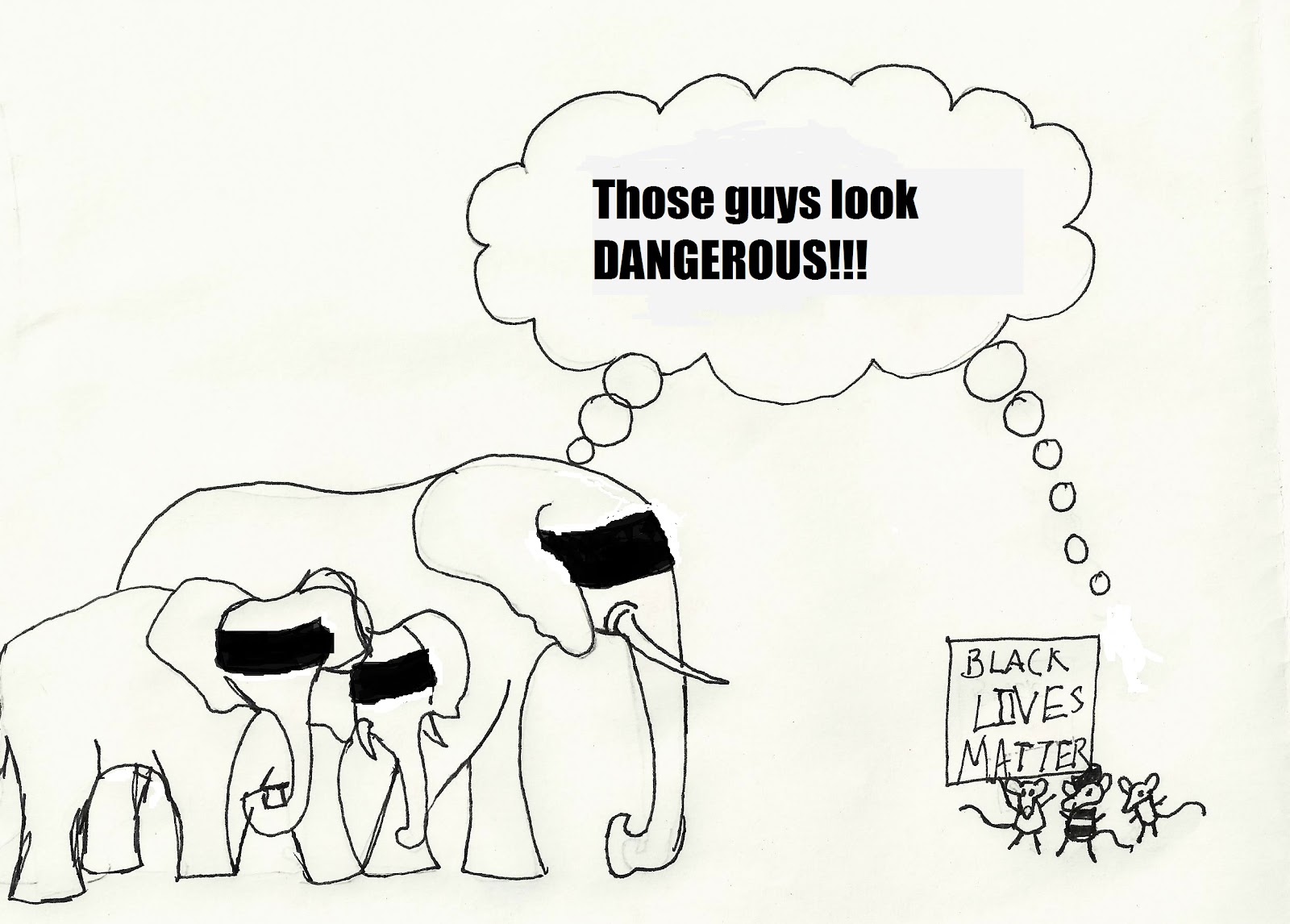
February 10: Our “Black Lives Matter Here” banner finally went up outside the church today. Our Church publicity director ordered an indoor and outdoor banner that said “Black Lives Matter Here” in white letters on black canvas. This was because our Black History Month theme was Speaking of Race: Black Lives Matter Here- What We Say and What We Do. The banner arrived in December. The indoor banner went up on February 1st. The outdoor banner was still not up when I went to church on February 8th, so I spoke to our building manager about it. She mentioned that our pastor had some concerns about it being a political statement. I reiterated to her that February was a short month and already more than 1/4 of the way over. She assured me that the banner would go up the next day. The next day, after a very emotional first session of PRISM, I went up to the church to drop off some groceries for the weekend and the banner was still not up. I texted my pastor to find out when our banner would go up. He told me he was visiting his mother and could we discuss it when he got back in town on Monday the 14th? I told him that I hoped his family was doing well but I would definitely need to speak with someone in his absence because the month would be half over by Monday. The next day, our banner finally went up. Why should I have to fight with church staff to get a banner up that says Black Lives Matter? A banner that affirms that my life matters? I was deeply disappointed and hurt to find out that despite all the progress my congregation has made, we still struggle with affirming the humanity and equality of people of color.
Cleveland has its challenges, and I can’t see myself spending the rest of my life confined to this city. I’d love to buy a farm outside of Oberlin Ohio in a few years. Oberlin is about 75% white, 4% Asian, 2 % Native American and 14% black. The median household income is just over $55,000 per year, similar to Cuyahoga county, but the poverty rate is 21%, slightly higher than Cuyahoga’s 18%. I worry that if I have children they won’t get the same excellent black history foundation that I received growing up, and that it might negatively impact their self esteem. I want them to love the skin they are born in and celebrate the richness of their cultural and ethnic background(s). I don’t feel like there is any ‘safe’ place to raise black children. But as I get older I worry more and more about them growing up on a little farm in Oberlin. Will the real world shock them? Will they put on plays about Dr. King in elementary school? Will they read Cullen and Keats? Will they know that they can be a doctor, an astronaut, an engineer, or a basketball player? If I marry a white man, will he know that our kids are black (in the eyes of society)? If we have a boy, will my husband be equipped to raise a black man? These are questions I never even considered in my twenties, and ones I still can’t answer.
It is impossible to distill the black experience into one single image or encounter. Race is a social structure, and like all collective creations is a nuanced amalgamation of hundreds upon thousands of experiences. At times, I have felt threatened. My armpits start to sweat whenever a police car gets behind me, and on road trips to Chicago, I still won’t stop for gas in Indiana when I’m by myself at night. Often, I feel like a minority. When I go to pitch competitions and all the other business owners are white, all the experts are white, all the funders are white, and all my competitors are white, I feel like a minority both because of my racial and socioeconomic identity. But in a way, I always feel secretly privileged. I still remember that the first people to walk this earth looked like me. I have learned that we all share a common female ancestor, and she too looked like me. I grew up with stories of ancestors strong enough to make life and new lives and lives while dying everyday-- a people who survived slavery, domestic terrorism, debt peonage, contract buying and other forms of housing segregation, Jim Crow, Mass Incarceration, political disenfranchisement, legal lynchings by police and still had enough rage, passion and hope to create gospel, jazz, bluegrass, rock and roll, funk, soul, hip hop, neo soul, and whatever you want to call that noise on the radio today. We are a strong people, and the legacy of that struggle lives on in me. And while I am never allowed to forget that I am a minority in this country, I am equally aware that as a black woman, I am in the majority group of the global population.
I love this brown skin I have lived and loved the last thirty one years in, and I am hopeful that the rest of the world will come to love me too, just as I am. I nurture this hope by working for change within predominantly white institutions. And I feed it with positive quotes like this one from online personality (and #officialBlackGirlCrush) Jacob Michael Mason: “Her skin absorbs the sun’s rays and her hair defies gravity. You can’t tell me that black women aren’t magical.”